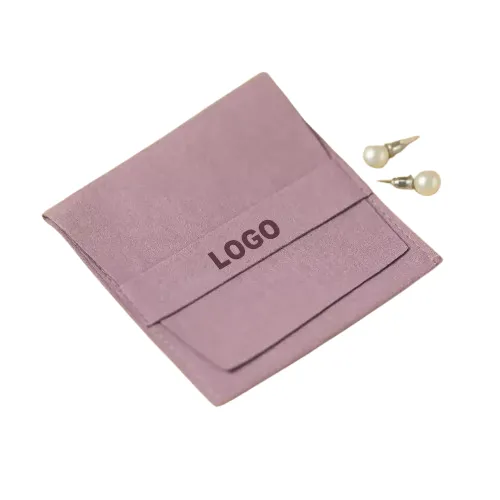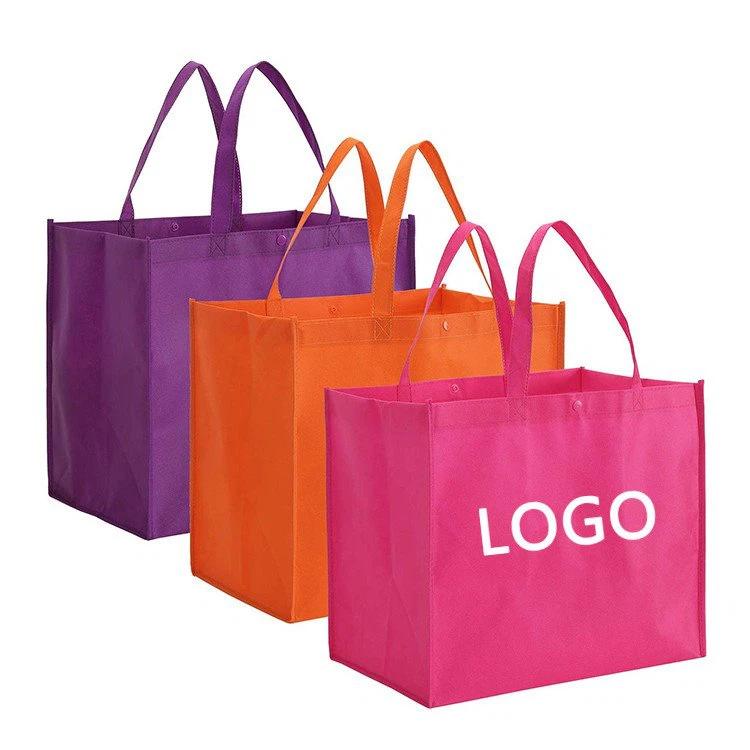
China has long dominated the global custom bag manufacturing landscape, accounting for over 60% of worldwide bag production and exports. The country’s vast manufacturing infrastructure, competitive pricing, and established supply chains have made it the go-to destination for brands, retailers, and importers seeking everything from promotional tote bags to luxury handbags.
- China’s export compliance reforms (effective Oct 1, 2025) increase exporter registration and real-name reporting.
- New step-declaration and traceability rules make small, mixed-SKU shipments more costly and risky.
- Factories are raising MOQ to spread fixed compliance costs and reduce inspection risk.
- Retail & shopping bags (laminated PP, printed bags, multi-material fashion bags) are especially affected.
- Overseas buyers should expect higher minimums, longer lead times, and higher total order values.
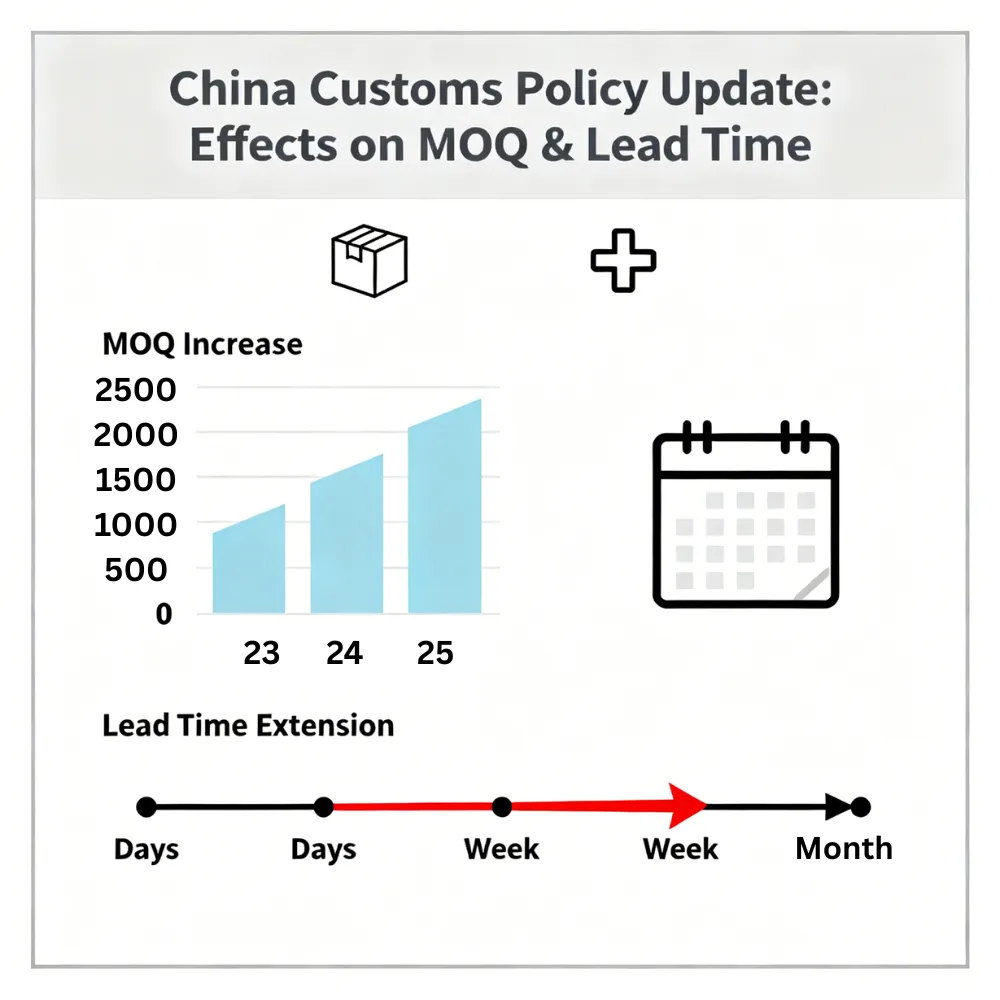
However, 2025 has brought a significant shift that’s catching many overseas buyers off guard: dramatically rising minimum order quantities (MOQ) from Chinese manufacturers. What once required orders of 500-1,000 pieces per design now often demands 2,000-5,000 pieces or more. This isn’t simply a matter of manufacturers becoming pickier about smaller orders – there are fundamental policy changes driving this transformation.
For businesses in the retail and shopping sector that rely on custom bags for branding, promotions, and customer experience, understanding these changes is crucial. The implications extend far beyond higher order minimums, affecting lead times, costs, inventory planning, and competitive positioning. This comprehensive analysis examines the new regulatory landscape, explains why it’s pushing MOQs higher, and explores what overseas buyers need to know to adapt successfully.
What’s New in China’s Export and Customs Compliance Policy (2024-2025)
The landscape of Chinese exports underwent a seismic shift with the implementation of comprehensive compliance reforms that took effect throughout 2024 and were fully enforced by early 2025. These changes represent the most significant overhaul of China’s export regulatory framework in over a decade.
The cornerstone of these reforms centers on enhanced exporter accountability and transparency. All exporters must now register directly with Chinese tax authorities before any customs clearance can proceed. This eliminates the previously common practice where small manufacturers could operate under trading companies’ licenses or use third-party declarations to expedite exports.
Under the new “dual-title” requirement, even factories without their own export licenses must have their complete legal information – including full company name, registered address, and tax identification number – listed on all export documentation. This requirement has effectively ended the era of anonymous manufacturing, where overseas buyers might work through intermediaries without knowing the actual production facility details.
Enhanced customs declaration protocols now require preliminary submissions before goods can enter customs supervision zones, with step-declaration frameworks that break down complex shipments into multiple verification stages. While these measures primarily target dual-use and high-technology products, the increased scrutiny has created a ripple effect across all manufacturing sectors, including consumer goods like custom bags.
The regulatory climate reflects China’s broader strategic shift toward more controlled and traceable exports, driven by both domestic policy objectives and international compliance requirements. This isn’t a temporary administrative adjustment but a structural change that manufacturers and exporters must permanently integrate into their operations.
Why These Policy Changes Push Up MOQ in Custom Bag Manufacturing
The connection between regulatory policy and minimum order quantities might not be immediately obvious, but the relationship becomes clear when examining the specific operational impacts on bag manufacturers and their cost structures.
Increased Compliance and Administrative Costs
The new registration and documentation requirements have created substantial fixed costs that apply to every export shipment regardless of size. Factories must now invest in dedicated compliance staff, upgraded documentation systems, and more complex record-keeping procedures. These costs remain essentially the same whether a shipment contains 500 bags or 5,000 bags.
For example, a custom bag manufacturer that previously processed export paperwork in a few hours now requires 2-3 days for the complete compliance workflow. This includes tax authority verification, detailed material declarations, and multi-stage customs submissions. When these fixed costs are spread across smaller orders, the per-unit impact becomes significant enough to erode already thin profit margins, forcing manufacturers to require larger order volumes to maintain viability.
Small and medium-sized bag manufacturers, which traditionally served the low-MOQ custom market, face particular pressure. They lack the resources for sophisticated compliance infrastructure, making each export transaction more costly and time-consuming relative to their operational capacity.
Reduced Flexibility for Low-Volume or Mixed Orders
Custom bag orders often involve multiple SKUs – different sizes, colors, materials, or printing designs within a single shipment. Under the new declaration frameworks, each variation potentially requires separate documentation, material traceability records, and compliance verification.
A typical promotional bag order might include five different color variations, two size options, and custom printing. Previously, this complexity was manageable within existing export procedures. Now, each variation requires detailed material disclosure, separate quality certifications, and individual tracking through the stepped declaration process.
The administrative burden of managing these complex orders has grown exponentially, encouraging manufacturers to standardize orders around fewer SKUs and larger quantities per variant. This shift fundamentally changes the economics of customization, making simple, high-volume orders more attractive than complex, low-volume ones.
Longer Clearance Times and Increased Export Risk
The preliminary declaration requirements and enhanced scrutiny have extended customs clearance timelines significantly. Where bag exports previously cleared customs within 1-2 days, the process now typically requires 5-7 days, with potential delays extending to several weeks for shipments that trigger additional inspections.
Small shipments face proportionally higher risk of delays and complications. Customs officials naturally focus limited inspection resources on shipments that seem unusual or inconsistent with typical commercial patterns. A 500-piece order might trigger questions that a 5,000-piece order would not, simply due to the statistical profile of normal commercial transactions.
Manufacturers and logistics providers have begun pricing these risks into their operations, leading to higher quotes for smaller orders or outright refusal to handle low-volume exports. The uncertainty of clearance times also makes it difficult to provide reliable delivery schedules for small orders, further reducing their attractiveness.
Supply Chain and Cost Pressures Amplified
China’s manufacturing costs have been rising across all sectors, driven by labor cost increases, environmental compliance requirements, and raw material price inflation. The bag manufacturing sector faces additional pressures from volatile petroleum-based material costs and increasing environmental regulations on chemical coatings and dyes.
When export compliance costs are layered onto these existing pressures, the threshold for order profitability rises dramatically. Custom bags that require specialized materials – such as laminated polypropylene, water-resistant coatings, or complex multi-material construction – already carry higher per-unit costs. Adding regulatory overhead pushes many smaller orders below the profitability threshold.
The cumulative effect has redefined what manufacturers consider a “minimum viable order.” What economic theory calls economies of scale have become not just advantageous but essential for operational survival under the new regulatory environment.
Specific Impacts on the Bag and Retail Shopping Segment
The custom bag sector serving retail and shopping applications faces particularly acute impacts from these regulatory changes due to the nature of their products and typical order patterns.
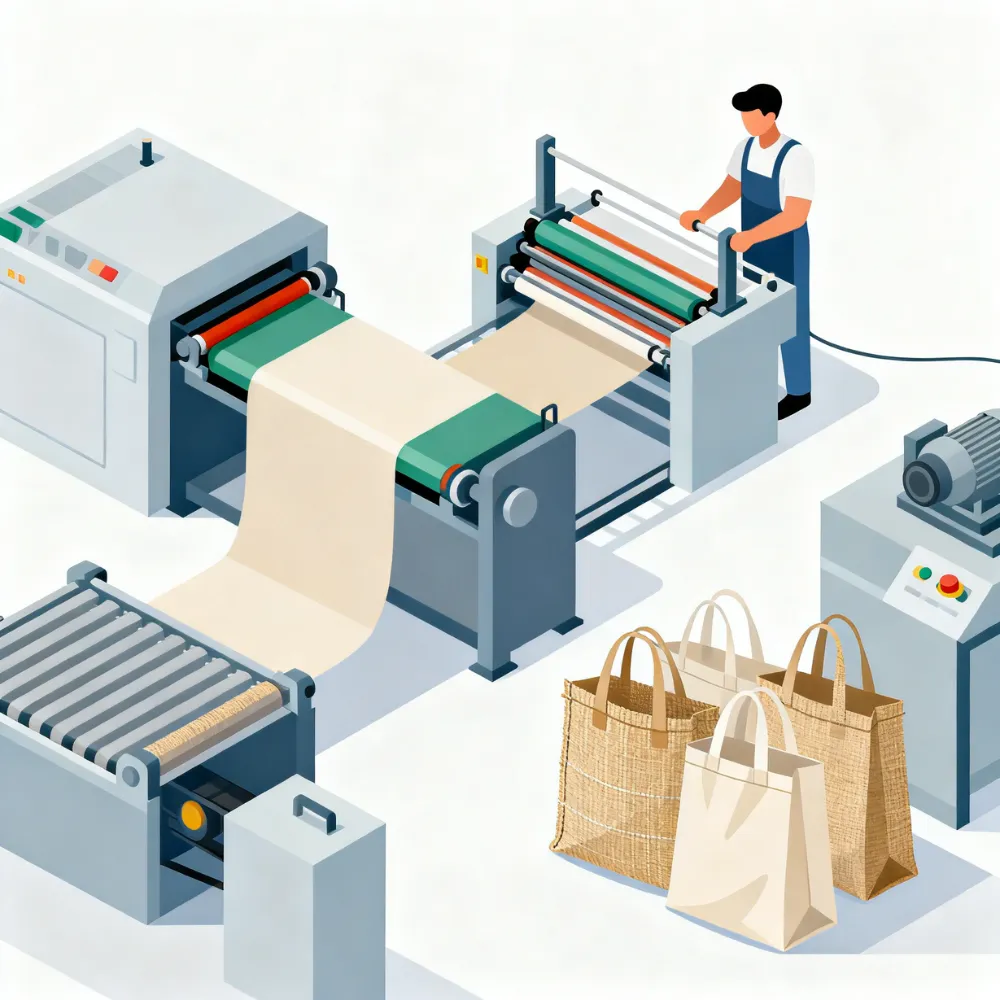
Custom printed bags, a staple of retail marketing campaigns, exemplify the challenges. These bags often require specialized inks, surface treatments, and quality certifications for food contact applications. Under the new transparency requirements, manufacturers must trace and document every chemical input, from printing inks to lamination adhesives. This documentation burden makes small print runs increasingly uneconomical.
Laminated polypropylene woven bags, widely used for durable shopping applications, present additional complications. Their multi-layer construction involves various materials – woven polypropylene fabric, polyethylene lamination film, and sometimes additional coatings or treatments. Each material layer now requires separate compliance documentation, increasing the administrative complexity of production and export.
Fashion and lifestyle bags incorporating multiple materials – combinations of canvas, synthetic leather, metal hardware, and various closures – face exponentially increased documentation requirements. A handbag design that previously required basic material declarations might now need detailed chemical composition reports, supplier certifications, and traceability documentation for each component.
The impact extends beyond documentation to practical production considerations. Manufacturers are consolidating their material suppliers to reduce compliance complexity, which can limit design flexibility and customization options. Some factories have begun refusing orders that involve more than three different material types or require specialized treatments that complicate export documentation.
Implications for Overseas Buyers
The transformation of China’s export regulatory environment creates several immediate and long-term implications that overseas buyers must navigate carefully.
Most immediately, starting MOQs have increased substantially across the industry. Where custom bag orders previously began at 500-1,000 pieces per design, current market conditions typically require 2,000-5,000 pieces or more, depending on customization complexity and material requirements. This shift represents a fundamental change in market accessibility, particularly affecting smaller brands, startups, and businesses testing new product concepts.
Lead times have extended beyond the production timeline to include compliance processing time. Orders that previously shipped within 2-3 weeks of confirmation now commonly require 4-6 weeks, with additional risk of unexpected delays if export documentation triggers customs review. This extension affects inventory planning, seasonal product launches, and promotional campaign timing.
Cost per unit hasn’t necessarily increased dramatically, but total order value has risen significantly due to higher MOQs. This creates cash flow challenges for smaller buyers and increases inventory risk for businesses that previously managed lean inventory through frequent smaller orders.
The competitive landscape is shifting to favor buyers who can commit to larger volumes and longer-term partnerships. Manufacturers are prioritizing relationships with customers who understand the new operating environment and can structure their orders accordingly. This preference system creates barriers for new market entrants and can disadvantage established buyers who haven’t adapted their sourcing strategies.
Perhaps most significantly, the traditional approach to MOQ negotiation has become less effective. Where previous negotiations focused primarily on price and volume trade-offs, current discussions must account for regulatory compliance costs that are largely fixed regardless of order size. Understanding this dynamic is crucial for productive supplier relationships.
Adapting to the New Export Environment
Successful navigation of this transformed landscape requires strategic adaptation rather than simply accepting higher costs and MOQs. Forward-thinking buyers are developing new approaches to custom bag sourcing that work within the new regulatory framework while maintaining business flexibility.
Consolidation strategies involve combining multiple product lines or seasonal orders to achieve higher volumes while maintaining customization. Instead of ordering different bag designs separately, buyers might coordinate annual requirements to place larger, consolidated orders that meet manufacturers’ new minimum thresholds.
Partnership approaches focus on developing closer relationships with fewer suppliers rather than maintaining broad vendor networks. This allows both parties to invest in streamlined compliance processes and develop efficient workflows that reduce administrative overhead over time.
Design standardization doesn’t mean eliminating customization but rather working within parameters that minimize compliance complexity. This might involve limiting the number of material types per order, standardizing sizes across product lines, or developing modular design approaches that allow customization within simplified manufacturing processes.
Alternative sourcing strategies include exploring manufacturers in other regions, though this often involves trade-offs in cost, quality, or capability. Some buyers are investigating hybrid approaches that combine Chinese manufacturing for high-volume standard products with alternative sources for specialized or low-volume requirements.
The New Normal: Higher MOQ as a Structural Reality
The regulatory transformation in China’s export sector represents a permanent shift rather than a temporary adjustment, fundamentally altering the economics of custom bag manufacturing and international sourcing. The rising MOQ trend directly results from these policy changes combined with existing cost pressures, creating a new baseline for commercial relationships that buyers must understand and adapt to.
For businesses in the retail and shopping sectors that depend on custom bags for branding and customer experience, these changes require strategic thinking about inventory management, product development, and supplier relationships. The days of small test orders and frequent design changes may be giving way to more strategic, higher-volume approaches to custom bag sourcing.
Understanding the policy drivers behind these changes provides the foundation for successful adaptation. Rather than simply negotiating around higher MOQs, effective buyers recognize that compliance burden, risk management, and cost structures are now permanently embedded in the manufacturing and export supply chain.
The companies that thrive in this new environment will be those that view these challenges as opportunities to develop stronger supplier partnerships, more efficient product development processes, and more strategic approaches to custom manufacturing. While the adjustment period may be challenging, the ultimate result could be more stable, professional, and sustainable sourcing relationships that benefit both buyers and manufacturers in the long term.
注目商品
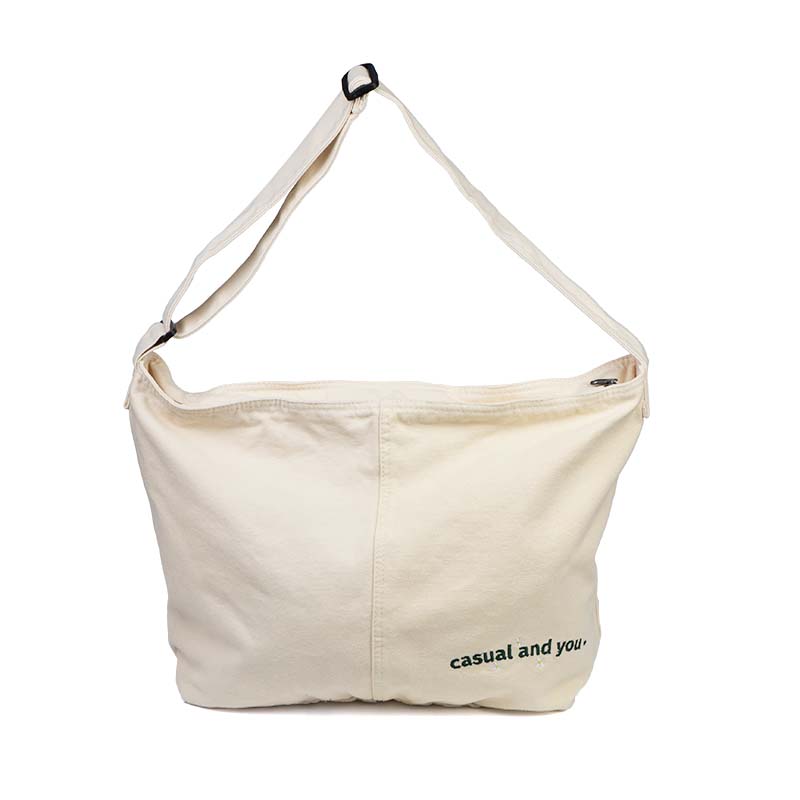
キャンバス・メッセンジャーバッグ